Winter and road conditions
Snow, ice, rain and fog mean you need a longer distance to stop and have poorer visibility. Adapt your speed and following distance.
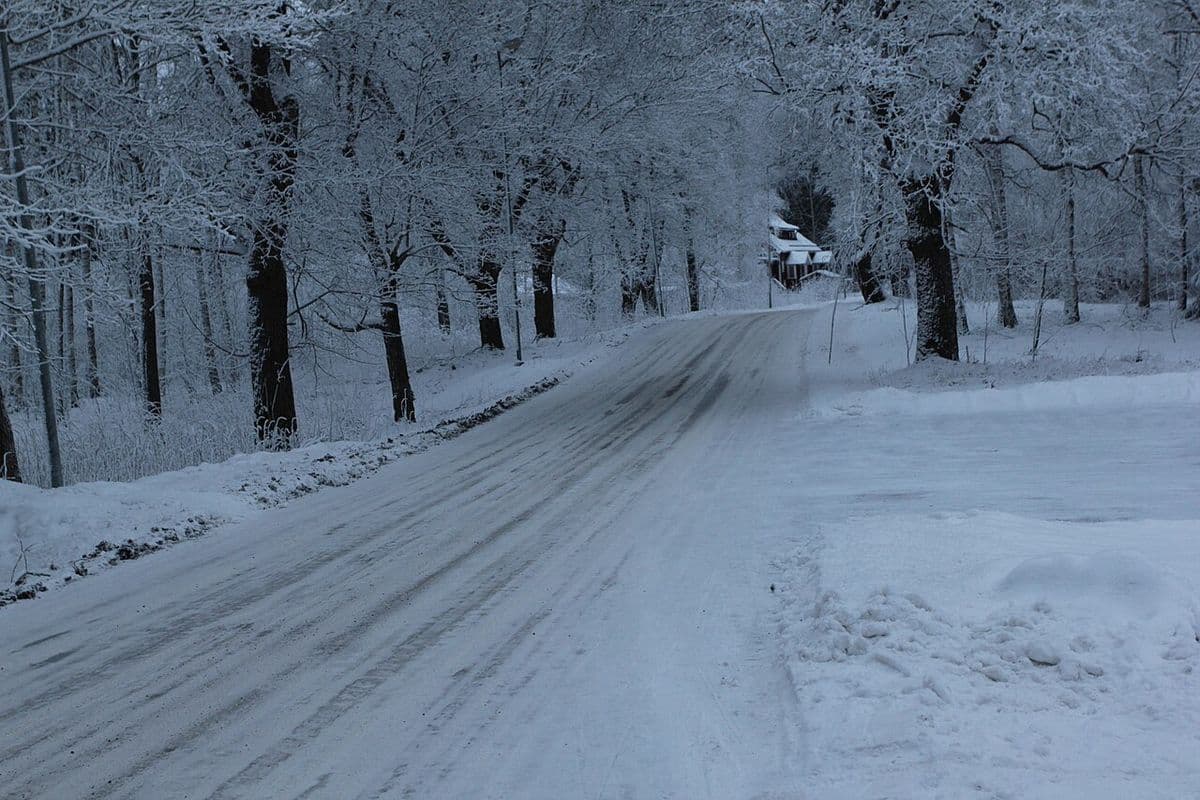
Adapt your speed
On slippery roads, in reduced visibility and on dirty roads you must keep a sufficiently low speed. The distance to the vehicle in front must be large enough that you do not risk hitting it if it brakes.
Source: Trafikförordningen 3 kap. 2 och 15 §§ · Legal text (Swedish): Road Traffic Ordinance (1998:1276) (opens in a new tab)
Winter tyres
- Cars, light lorries, light buses and their trailers must have winter tyres or equivalent equipment from 1 December to 31 March when there are winter road conditions.
- Heavy lorries and heavy buses must have winter tyres from 10 November to 10 April regardless of road conditions.
- There are exceptions, for example for driving the shortest route to a vehicle inspection and for cars that are 30 years old or older.
Source: Trafikförordningen 4 kap. 18 a–18 c §§ · Legal text (Swedish): Road Traffic Ordinance (1998:1276) (opens in a new tab)
Studded tyres
Studded tyres may be used from 1 October to 15 April. Outside that period they may only be used if there are, or can be expected to be, winter road conditions. The municipality can ban studded tyres on certain streets.
Source: Transportstyrelsens föreskrifter (TSFS 2009:19) om användning av däck · Legal text (Swedish): Swedish Transport Agency rules on winter and studded tyres (opens in a new tab)